
Originally, in the 1970s, a group of activists demanded the creation of more green space in the Central Ward of Newark, New Jersey. As a result, they eventually succeeded in getting a long-unused site developed as a nine-acre park that would be named for Nat Turner to commemorate his fight for freedom for enslaved Africans in the United States.
A strong, committed partnership of community members, city agencies, local schools, and The Trust for Public Land participated in a sustained engagement process to design the park. Through interactive sessions, the community determined that art would be a key feature of the park. As a result, participants identified the evolution of African and African-American music as the theme of the art.
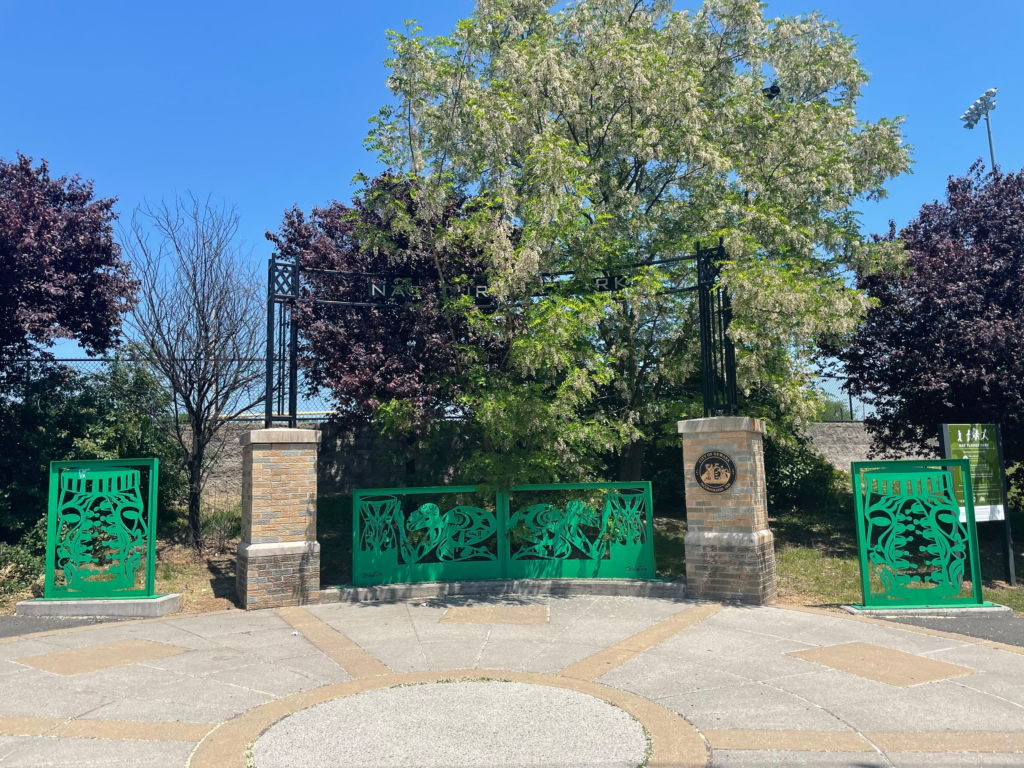
Colorful steel sculptures welcome visitors at each of the five entrances to Nat Turner Park, serving as visual markers for the major musical genres that chronicle the African-American experience. In addition, a vibrant tile mosaic at the park’s amphitheater reflects the overall theme. For example, it incorporates musical instruments, the names of musicians, and references to Newark’s musical history.
This narrated video tour of the installation traces the evolution of the musical genres depicted and explores the features of the sculptures and mosaic.
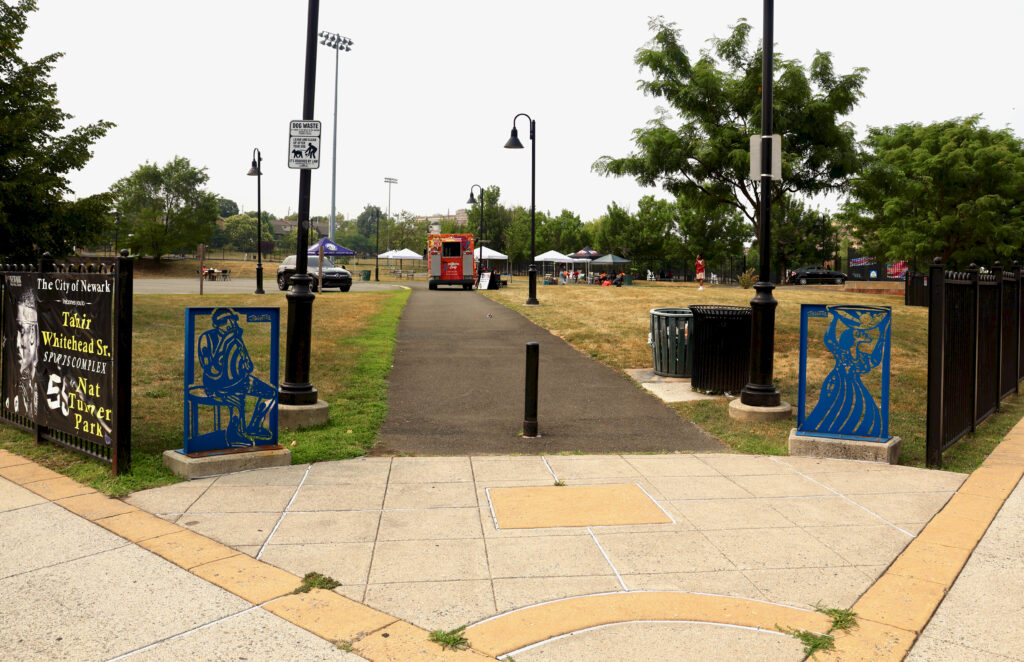
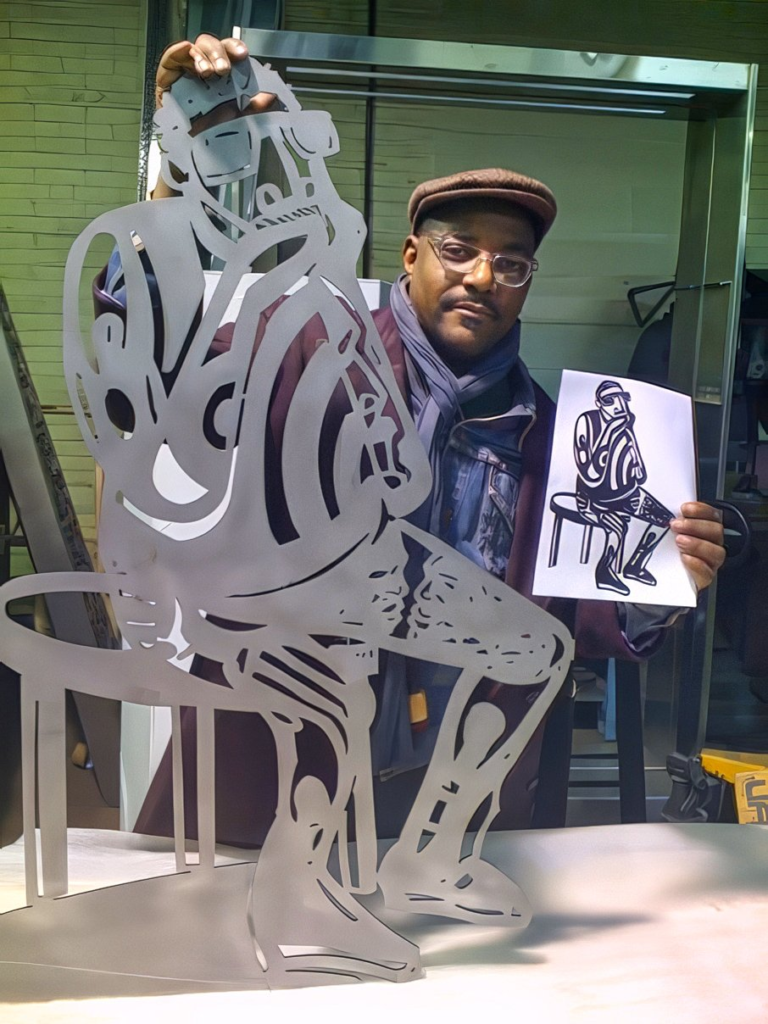
Jerry Gant (b. 1961–d. 2018) created the sculptures that adorn the entrances to Nat Turner Park. Throughout his career, his creative impulse reflected an enduring genre-defiance that shattered categories and resisted the limits of classification.
As an interdisciplinary visual artist, writer, educator, activist, cultural historian, and theorist, Jerry Gant shaped Newark’s arts and culture scene for more than 35 years. Moreover, as a Newark native, he connected the literary, performing, and visual arts through his extensive achievements.

In addition, Katherine Hackl designed the tile mosaic at the Nat Turner Park amphitheater. The installation includes more than 150 tiles created by community members through workshops she held in schools and community centers near the park.
Hackl specializes in custom handmade decorative tile work for both public and private commissions. In her work, she draws on the Arts and Crafts traditions of tile making. As a result, the mosaic reflects both skilled craftsmanship and strong community involvement.
First, Jerry Gant’s pieces integrate intricate figures and imagery within sculptural frameworks.
In turn, their placement introduces viewers to the idea of art as architecture, while also providing decorative alternatives to traditional fencing and barriers.
Additionally, doubling is prevalent in Gant’s creations, as the pieces at several of the entrances feature two elements, or two parts.
Finally, the amphitheater installation incorporates alternating rows of blue mosaic tiles designed by community members and yellow tiles that represent wavelengths.
Below, the art installation gallery highlights details, textures, and views of the finished work.
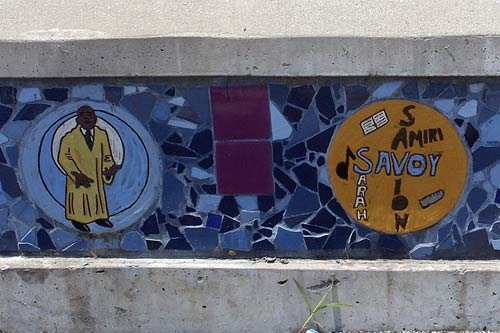
Here, two round tiles show a choir singer and several musical terms in a crossword pattern
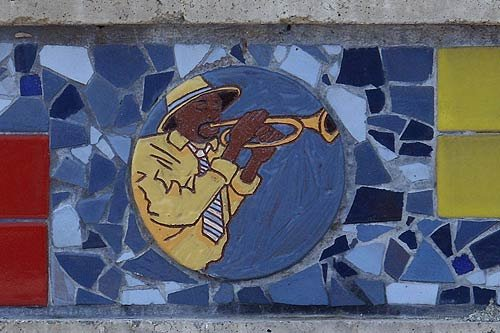
Similarly, this round tile shows a jazz trumpet player.
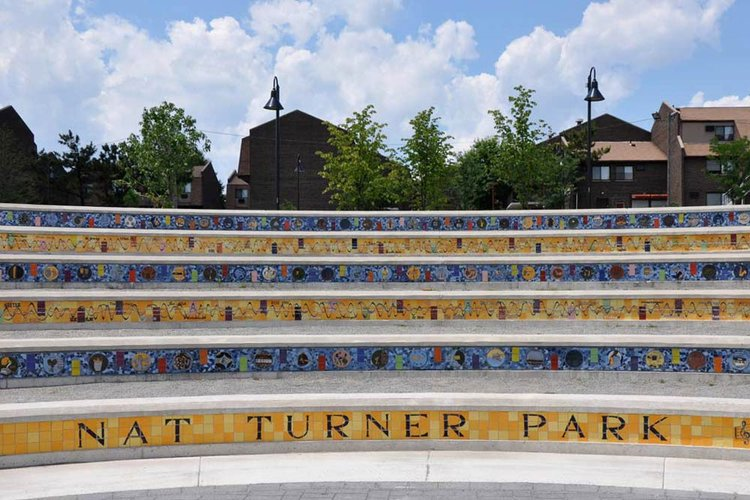
Meanwhile, the amphitheater features a tile installation that expands the overall artistic theme.
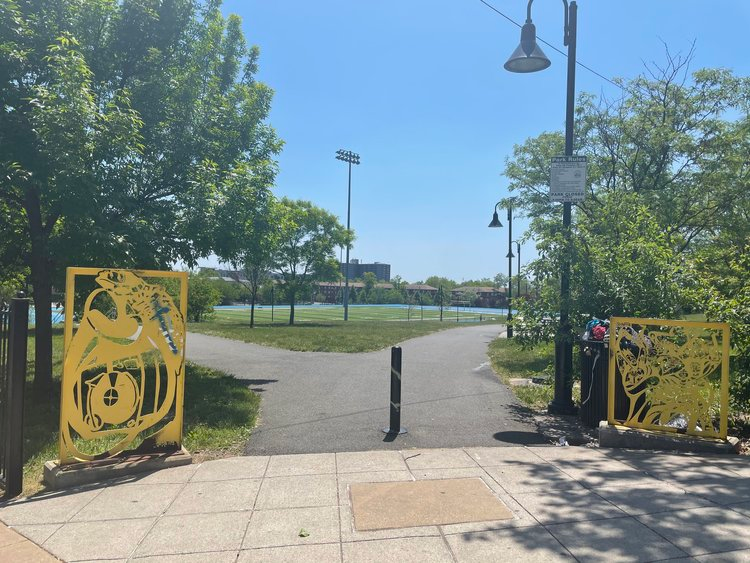
At the side entrance on 18th Avenue, two yellow steel sculptures depict the Rhythm & Blues musical form.
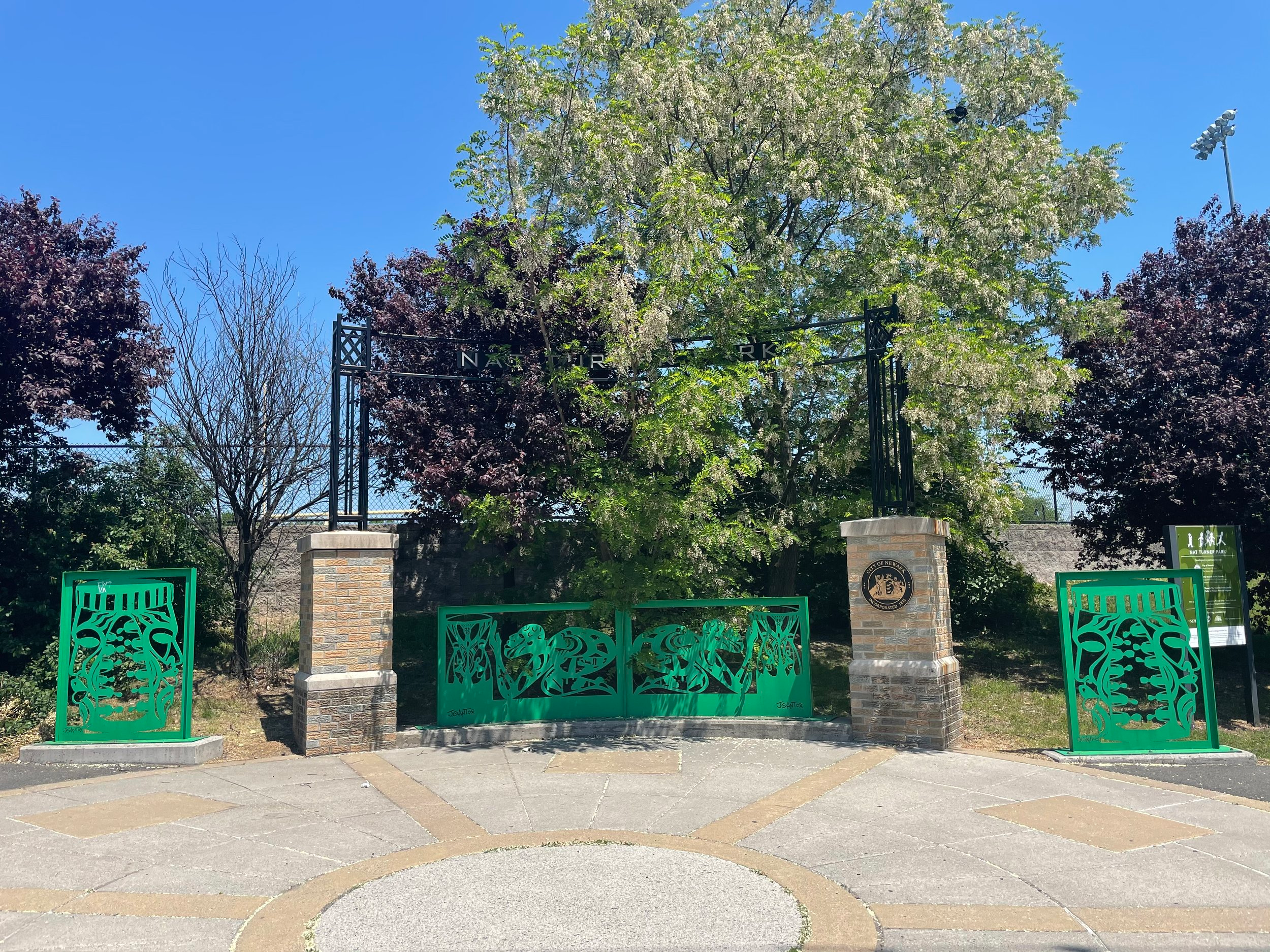
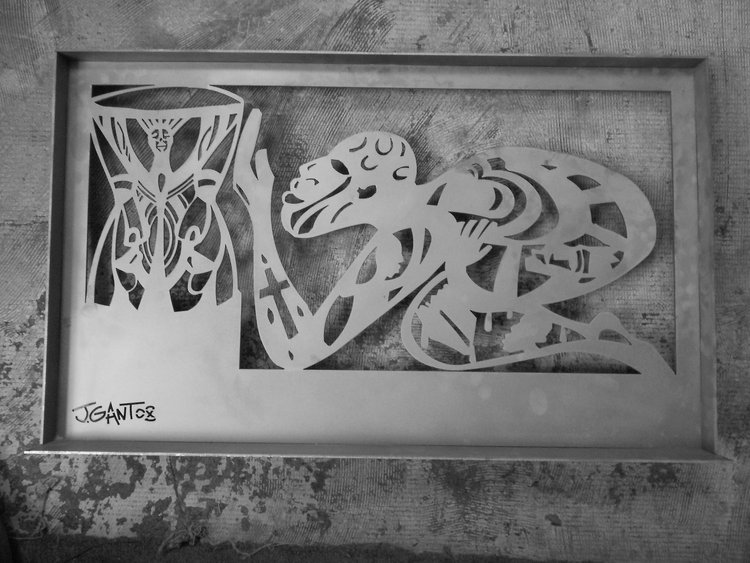
At the main entrance on Muhammad Ali Avenue, two large green steel sphinx figures stand back-to-back and are flanked by African drums on both sides.
In addition, this model shows one of the sphinx figures featured at the main entrance on Muhammad Ali Avenue.
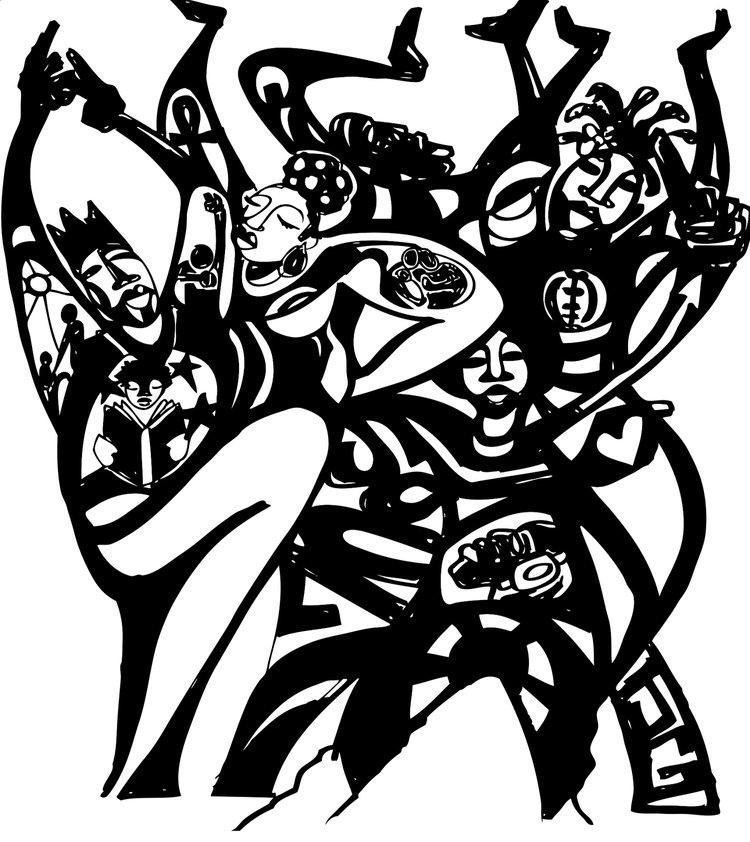
Additionally, this image shows Jerry Gant’s original artwork for one of the complex sculptures depicting the Rhythm & Blues musical form.
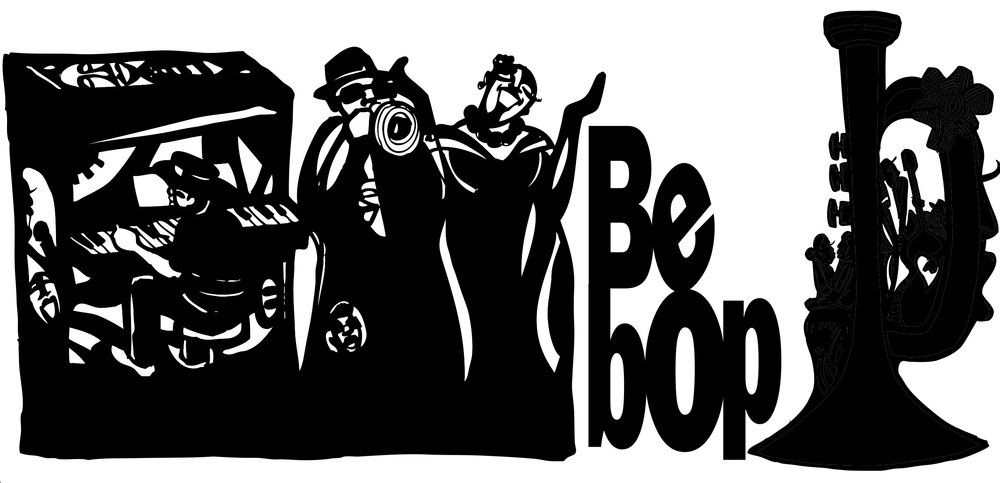
Likewise, this image features Jerry Gant’s original artwork for the sculpture of Bebop musicians.
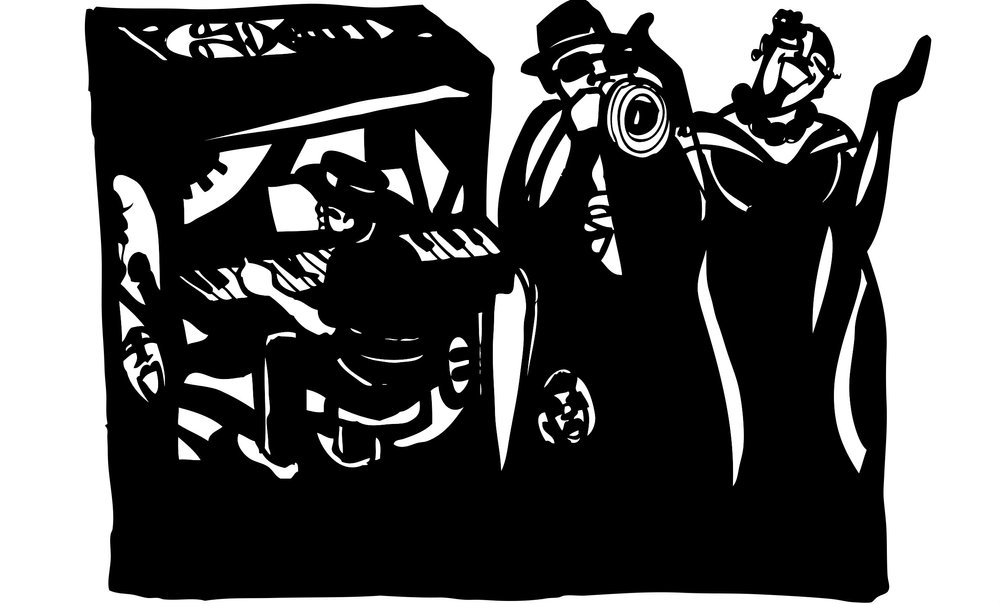
Elsewhere in the collection, another image shows Jerry Gant’s original artwork for the sculpture of Bebop musicians.
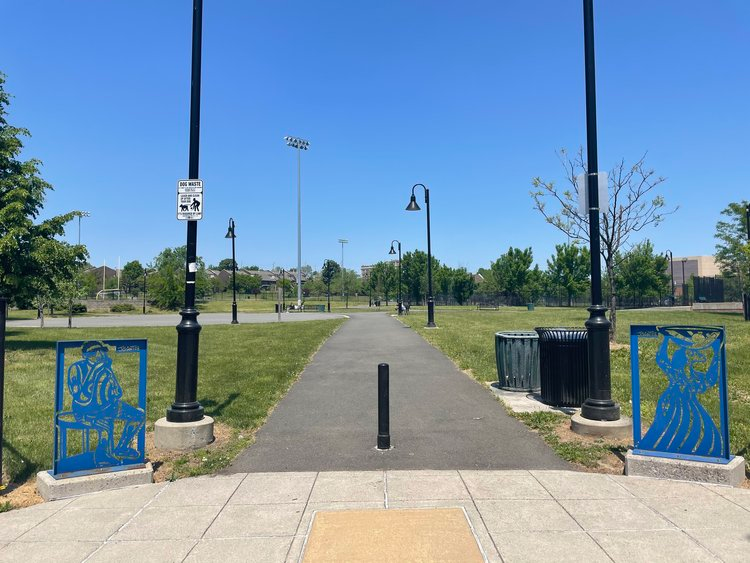
At a side entrance on Muhammad Ali Avenue, two blue steel sculptures represent a male Blues musician and a female Gospel singer.
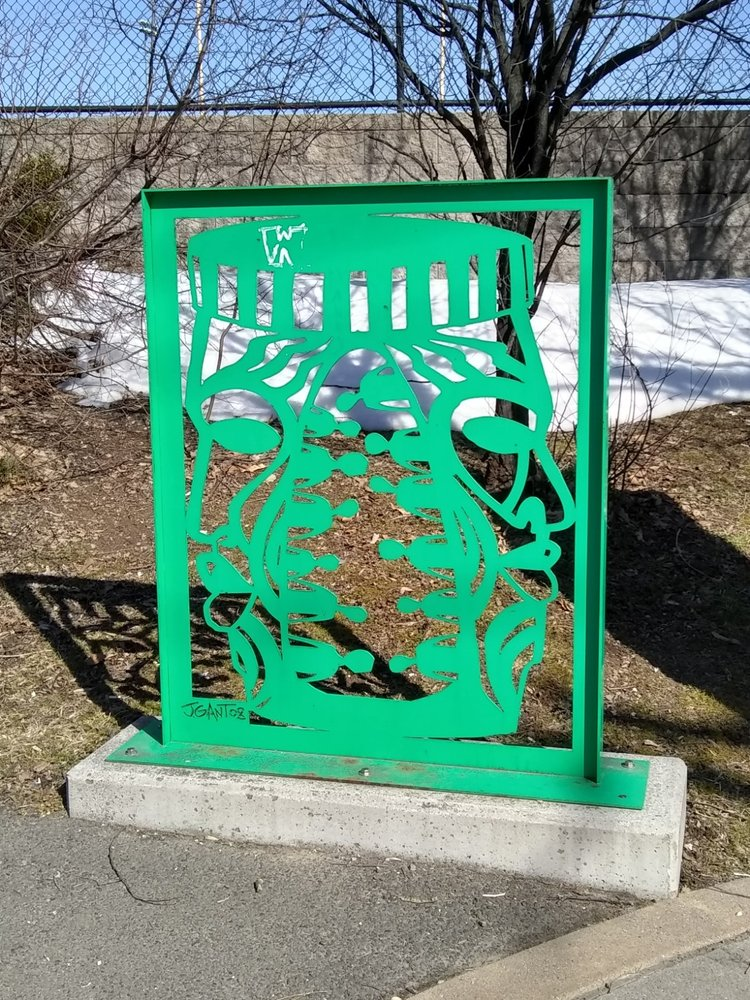
At the main entrance on Muhammad Ali Avenue, a green steel sculpture of an African drum represents the origins of African-American music.
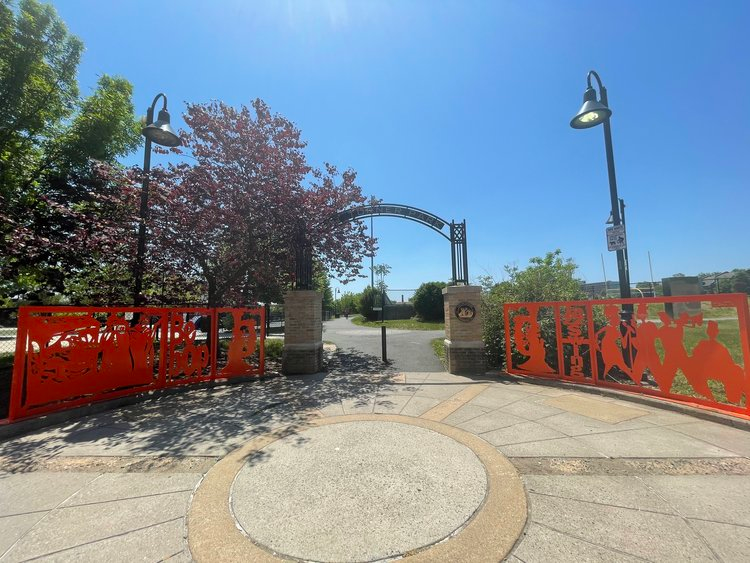
Finally, at the main entrance on 18th Avenue, two large red steel sculptures represent the intertwined musical forms of Bebop, Jazz, and Swing.
Celebrating collaborative art that reflects the voices, history, and spirit of Newark’s neighborhoods.
"When we would be talking about the park, he would always remind himself and me that this is history, this is making history… Just him being so aware of that to me is, I guess that would have to be my favorite overall feeling about Jerry. There was an expression… where people sometimes feel the need to play small. You feel the need to maybe not appear too boastful, and he didn't care about that. And so, he wanted to make sure, through the course of doing something this significant, that it was clear how significant that was."
Linda Street
Pink Dragon Artist Syndicate
“One of the things that we wanted to do was talk about Newark's connection to music and its music history there… They remembered old jazz clubs. They remembered old record labels. They remembered old recording studios. And a lot of people focused on some of that, and they had a great memory session talking some of that through, which was fun.”
Katherine Hackl
Katherine Hackl Pottery and Tiles
“You'll notice there's a lot of different tiles in [the amphitheater] and all those tiles, the mosaic tiles, represent different people, different [generations] from all around this area… As people grow and they move and they leave and even some folks die, those components are still a part of the park that we can come back to."
Donna Kirkland
Senior Director of Community Engagement Trust for Public Land, New Jersey Office
"The first thing that really struck me was how concerned the young people, particularly the younger children, were with the park…Those moments when the students began realizing that their ideas mattered… Some of them are now adults with children who may now be ready to bring their children over to the park. And I would hope some of them then would actually look and be able to tell their children, ‘When I was in fourth grade or fifth grade, we were helping to plan this park.’ Maybe, even go and find their mosaic and say, ‘See that? I made that one.'"
Dr. Ray Lindgren
Former Executive Assistant to the Superintendent Newark Public Schools
"I wonder what children from the neighborhood see as they walk to school as they pass [Jerry Gant’s] art. I know as a kid I would see graffiti and be amazed by it. The art intrigued me enough to make me want to do it. I believe it was Mos Def that said, ‘Good art will make U want to create it yourself.’"
Kortez
Visual Artist and DJ